The right awning fabric isn’t just about looks, it defines how your space handles real weather. If you want long-term protection from sun and rain, not all fabrics will deliver. Here’s what matters most: — and our guide to replacing retractable awning fabric digs deeper.
Quick guide to top-performing fabrics:
- Polyester: Best all-around for strength, fade resistance, and mildew control.
- Solution-dyed acrylic: Great in high sun but slower to dry in humidity.
- Vinyl-coated polyester: Strong against rain but holds heat.
- Canvas: Classic look, but high-maintenance and short lifespan.
- PTFE-coated: Built for extreme weather, durable, but overbuilt for most homes.
Cheaper materials often skip key protections like UV resistance or water repellency, which leads to sagging, fading, and early failure.
Fabric choice impacts your awning’s comfort, lifespan, and how often you’ll need repairs.
Knowing what to look for in fabric is just the start, stick around to learn how structure, maintenance, and smart use help your awning perform better and last longer than you ever expected.
Why the Right Awning Fabric Matters
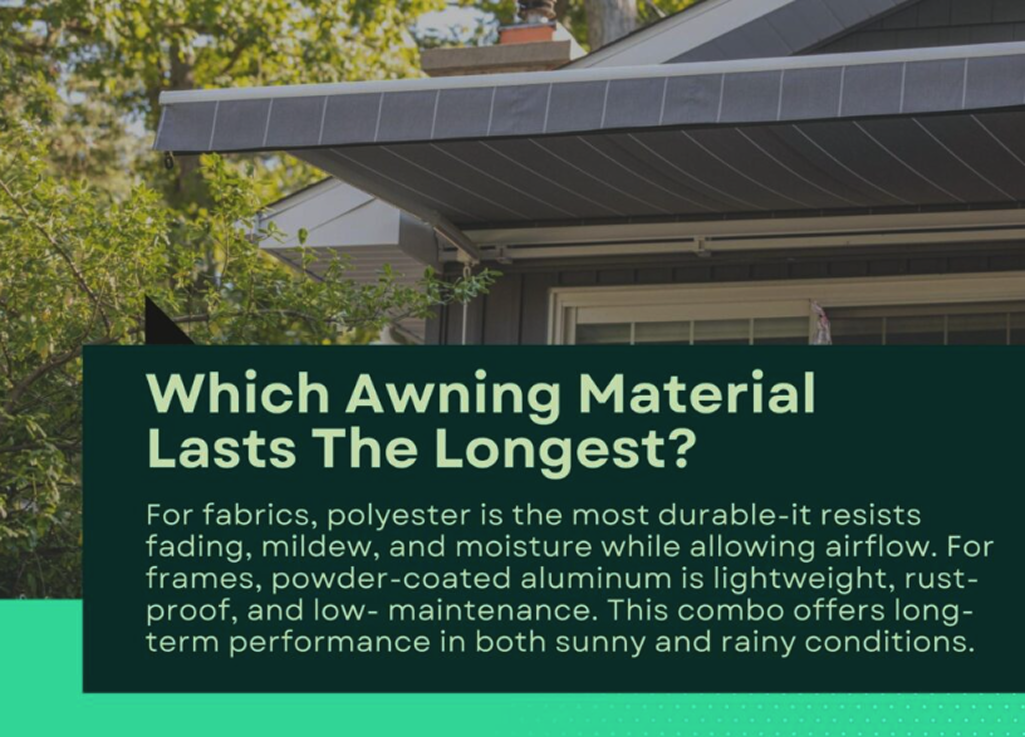
Awnings do more than provide shade, they turn patios into usable living spaces.
The right fabric determines how long that comfort lasts. UV, rain, and humidity break down weak materials, so choosing a high‑performing fabric is essential for long‑term outdoor use.
The Fabric Affects Everything
The material used in your awning directly affects how much sun it blocks, how cool your space stays, and how long the fabric looks new.
Fabrics with high UV resistance stop colors from fading and protect your skin from sun exposure.
Those without it? You may notice fading, cracking, or even tearing within just one or two seasons, especially in areas with long, sunny summers.
Fading, Mildew, and Early Wear Start Here
If you’ve ever seen an awning that looked great at installation but discolored or drooped within a year, it likely came down to one thing: poor fabric.
Many homeowners report that even their so-called “durable” awnings faded fast or developed mildew after a rainy week.
Without mildew resistance or quick-dry features, water can linger and weaken the fabric, especially when retracted while damp.
The Features to Look for in a High-Quality Fabric
Awnings should be built around fabrics that are:
- Solution-dyed for long-term color protection
- Mold and mildew resistant
- Water repellent, not just water-absorbent
- Able to handle seasonal changes without sagging or shrinking
These features aren’t “nice to have.” They’re essential if you plan to enjoy outdoor spaces like pool decks, patios, or open-air kitchens long term.
The right fabric is the foundation, but fabric alone doesn’t make an awning storm-ready.
In the next section, we’ll explore what truly determines whether an awning survives rainy days or fails when you need it most.
5 Best Awning Fabrics for Your Home
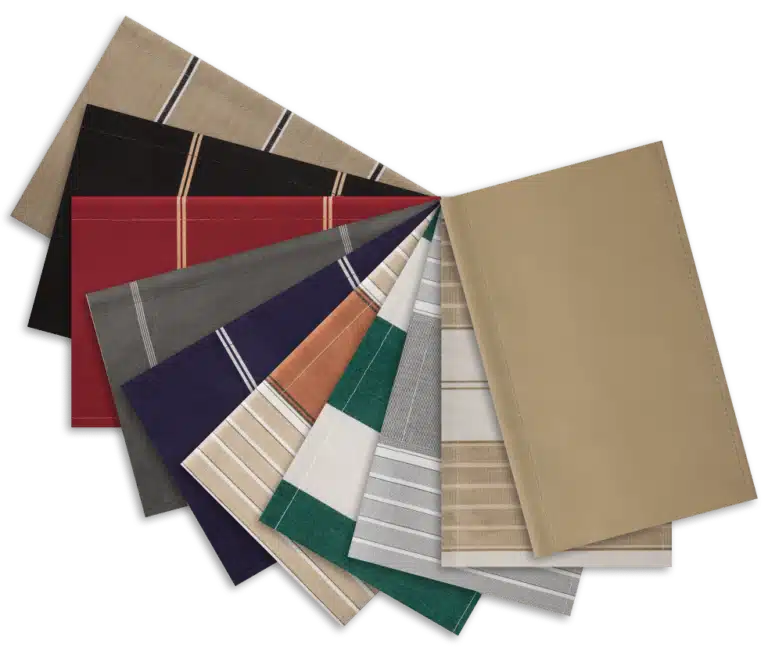
Choosing the right awning fabric isn’t just about looks, it shapes how your space performs in real weather.
Whether you’re hosting a patio dinner or relaxing with a book by the pool, the fabric covering your outdoor space affects temperature, comfort, and durability.
Here’s how the five most common awning fabrics compare in real-world use.
1. Polyester: Strong, Reliable, and Built for Daily Use
Polyester is one of the most trusted choices for modern awnings.
It’s engineered to handle everything from intense sun to passing storms and is often used in residential retractable systems for its strength and flexibility.
- Excellent UV resistance keeps the fabric from fading over time
- Mold- and mildew-resistant with the right protective coatings
- Quick-drying surface helps prevent staining after rain
- Lightweight yet durable, ideal for automated retractable systems
With its mix of durability, appearance, and year-round reliability, polyester is a go-to choice for homeowners who want lasting shade without the hassle.
2. Solution-Dyed Acrylic: Great for Sun, Less for Moisture
Solution-dyed acrylic fabrics are popular for their vibrant color and breathability.
Their structure helps block UV rays, keeping your space cool and the fabric vibrant. But they can retain moisture in high-humidity areas.
- Fade-resistant color woven through every fiber
- Breathable weave helps reduce heat buildup
- Offers reliable year-round sun protection
- May require extra drying time after rainfall
This fabric excels in dry, sunny regions, but moisture-prone zones may require additional upkeep to avoid mildew.
3. Vinyl-Coated Polyester: Water-Shedding, But Not Heat-Friendly
Vinyl-coated polyester stands out in wet climates thanks to its water-shedding properties.
Its surface resists moisture, stains, and mildew, but it tends to trap heat underneath, especially during hot summer days.
- High resistance to rain, making it ideal for stormy weather
- Resilient surface resists mildew and fading
- Less breathable, resulting in warmer conditions underneath
- Often used in commercial or permanent shade structures
Best used in rainy climates where water runoff matters more than airflow.
4. Cotton Canvas: Traditional Feel, High Maintenance
Canvas has a timeless, nostalgic look that complements older homes and classic architecture.
However, its natural cotton base absorbs moisture and fades quickly unless treated, making regular care essential.
- Warm, familiar appearance with soft texture
- Absorbs water and requires frequent drying
- Coatings can delay fading but wear off over time
- Shorter lifespan compared to modern synthetic fabrics
This fabric fits decorative use, but isn’t ideal for season-after-season exposure or high-use patios.
5. PTFE-Coated Fabric: Premium Strength for Extreme Weather
PTFE fabrics are known for their industrial-grade strength and resistance to cracking, even in freezing conditions.
These high-tech materials are often used in demanding climates with snow or strong winds.
- Withstands extreme temperatures without cracking
- Resists mold, water, and long-term wear
- Highest price point of any fabric type
- Typically used for specialty or commercial-grade awnings
Great for snow-heavy or high-stress zones, but overbuilt for average backyard use.
Fabric selection sets the tone for how your awning performs, but durability doesn’t stop at the textile.
Now let’s explore the structural features that help an awning stand strong in real weather, especially when rain enters the picture.
Even the Best Awning Fabric Needs the Right Kind of Care
The fabric you choose plays a big role in how your awning performs, but even top-tier materials won’t last without the right upkeep. Regular care can prevent fading, mildew, sagging, and more.
These simple habits help keep your awning looking sharp and working like it should, season after season.
Rinse Often, Deep Clean Occasionally
A monthly rinse with a garden hose is usually enough to remove surface dirt, dust, or pollen.
Twice a year, plan for a deeper clean using a soft brush and mild soap. Avoid strong chemicals that can break down coatings or weaken the weave.
Never Retract It While Wet
Even quick-drying fabrics can trap moisture when rolled up too soon. Always let the awning air-dry fully before retracting it, especially after rain or heavy dew.
This prevents mildew and staining, common issues in shaded or humid backyards.
Watch the Pitch and Tension
To avoid water pooling, make sure your awning is installed with the proper pitch. Over time, tension can shift slightly, especially after windy days.
If you notice sagging or ripples, check the fabric alignment or ask a pro to retighten it.
Skip the Pressure Washer
High-pressure water can damage fabric coatings, push moisture into seams, or loosen stitching. Instead, stick with a low-pressure hose and soft cleaning tools to extend the life of your fabric.
Use a Cassette for Extra Protection
When retracted, your awning fabric is still vulnerable to rain, dust, or snow unless it’s fully enclosed.
A cassette-style housing protects the fabric when not in use, helping it stay clean and dry during off-seasons.
Routine care keeps your awning strong, but fabric care alone won’t shield you from all weather.
In the next section, we’ll explore how smarter choices up front can prevent costly mistakes down the line.
The Truth About Cheap Fabrics: You Might Pay Twice
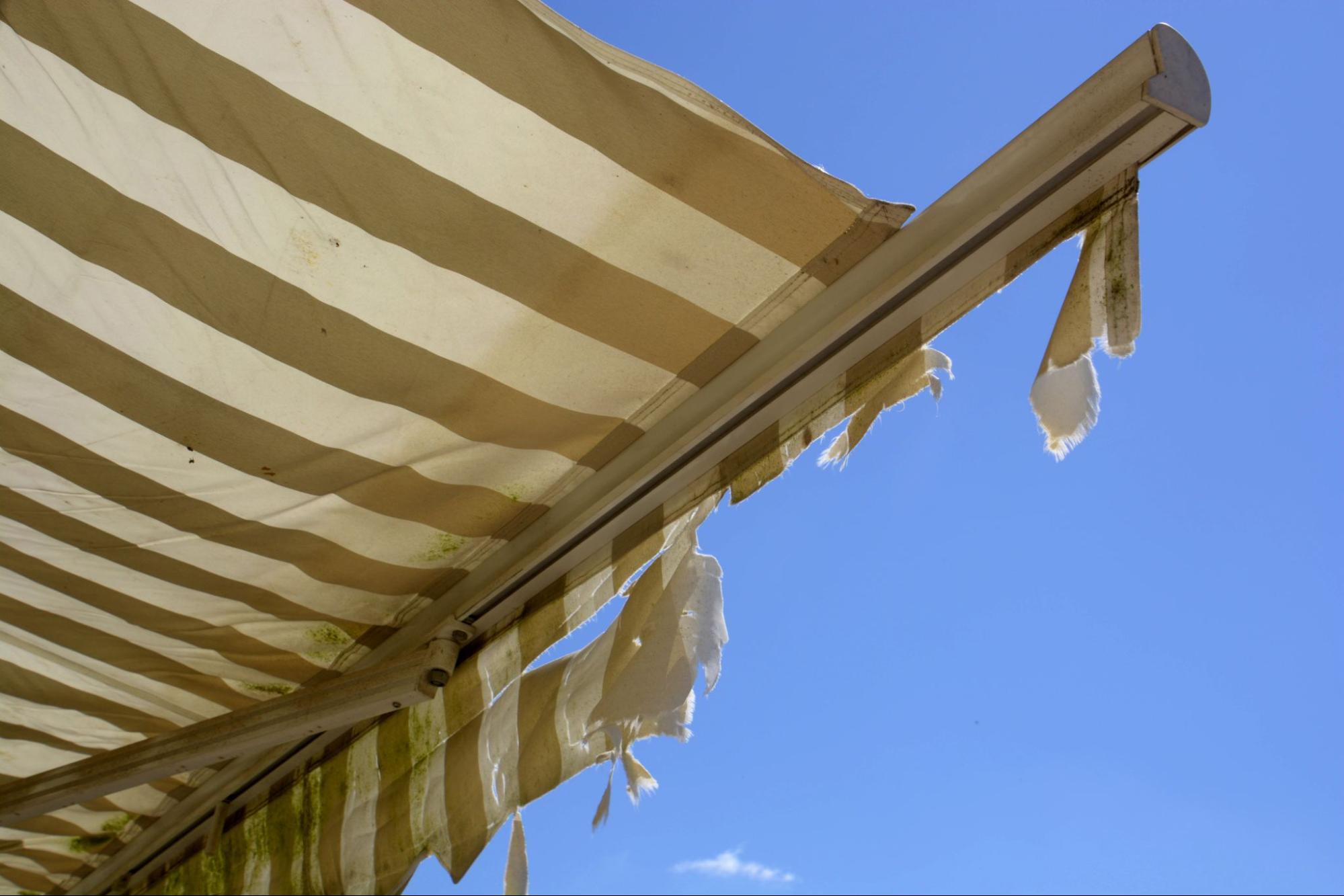
Cutting corners on fabric cost may seem like a win in the moment, but low-grade materials often lead to expensive repairs, early replacements, and regret.
Awnings are long-term outdoor structures, and the fabric should hold up like one.
Low-Cost Fabrics Wear Out Fast
Budget fabrics often skip key protections like UV resistance or mildew control.
The result? Fading after one summer, stretching after a few rainstorms, and sagging that makes even a new awning look worn.
Replacements Add Up Quickly
When a fabric fails, the cost isn’t just another roll of material.
Homeowners often face added labor, mounting repairs, or hardware upgrades, especially when awnings lose shape and don’t retract properly.
DIY Kits Often Miss the Mark
Many low-cost, online DIY kits lack the features needed for lasting outdoor use.
They may not include proper waterproofing, come in non-standard sizes, or require tools the average homeowner doesn’t have.
That mismatch often means early replacement or failed installs.
Short Warranties Are a Red Flag
Some premium fabrics come with 10-year coverage against fade and wear, while low-cost vinyls may offer only a one-year limited warranty.
That gap usually reflects the true performance difference you’ll see after a full season outdoors.
Reliable Fabric Protects More Than Shade
Paying for quality upfront means fewer repairs, better weather protection, and more time enjoying the space, whether it’s a poolside lounge or your favorite dinner spot on the patio.
Choosing a cheaper fabric might save you today, but it often costs more tomorrow in repairs and lost comfort.
Investing in quality ensures your awning delivers protection and performance season after season.
Choosing the Right Fabric Is Just the Beginning
A quality awning fabric protects more than your patio, it protects your time, comfort, and peace of mind.
From outdoor offices to poolside shade, the right material lets you enjoy your space without constant upkeep or early replacement.
Polyester stands out for a reason, it checks all the essential boxes: durability, UV stability, and mildew control.
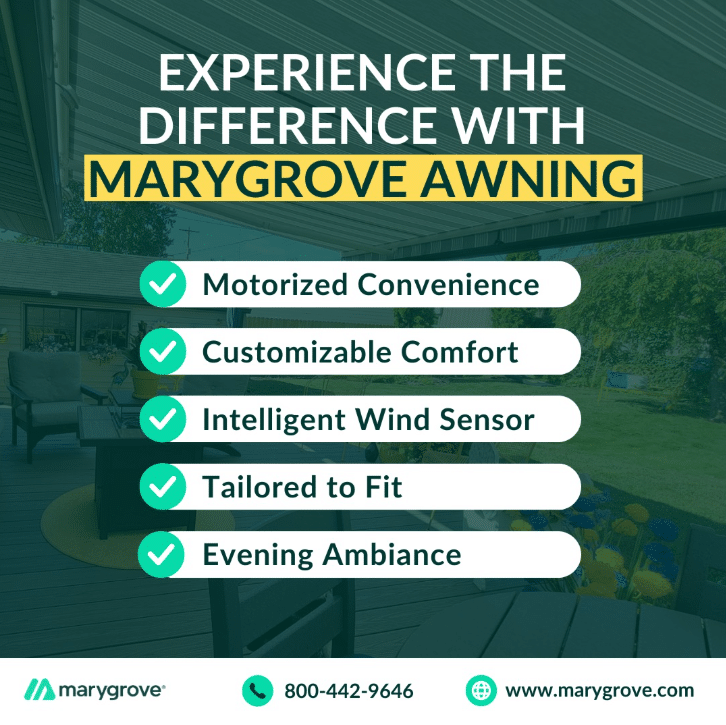
But even the best fabric needs care, smart retraction, and solid structure to perform through all seasons.
If you’re investing in your home, choose fabrics designed to perform, not just to look good on day one.
Get lasting comfort and protection with professionally installed Marygrove awnings using the best fabrics in the industry.

Josh Elberly
Josh Eberly's background in home renovation runs from the ground up. After years successfully flipping houses and seeing firsthand what adds real value and livability to a property, he brings that practical, hands on perspective to the outdoor space at Marygrove. Today he focuses on retractable awnings, patio covers, and custom shade solutions that help homeowners turn underused patios and decks into spaces they actually enjoy. Outside of work Josh enjoys spending time with his family, sports (WE ARE!), and cultivating experiences with his close friends.
Favorite Marygrove Awning - Harbor Grey with White Frame.