Outdoor living works better when the design accounts for the way your backyard handles sun, wind, rain, and temperature changes. A design that feels comfortable in a dry desert climate may struggle in a humid or coastal environment.
Outdoor living ideas by climate include:
- Hot, dry climates: Retractable awnings bring flexible shade over the spaces you use most, paired with drought-tolerant landscaping that doesn’t fight the climate.
- Hot, humid climates: Airflow matters as much as shade here, so plan for moisture-resistant materials and drainage that keeps up with frequent storms.
- Cold and snowy climates: Durable surfaces and captured winter sun go a long way, then fire features and wind protection carry the space into evening.
- Mild and temperate climates: Smart shade and seasonal landscaping let the space shift with the weather instead of working against it.
- Coastal and wind-prone areas: Salt-tolerant plants and windbreaks protect the view, while storm-season prep keeps the patio ready when weather turns.
Local conditions affect more than plant choices. They shape which materials hold up and even which months you’ll actually want to be outside.
At Marygrove, we know this firsthand. We install weatherproof awnings in climates ranging from the heat and humidity of Texas and Florida to Michigan’s snowy winters, helping homeowners make shade part of a backyard that works with the weather where they live.
Outdoor Living Ideas for Hot, Dry Desert Regions

Hot, dry regions bring a specific challenge: keeping the backyard inviting when the sun is intense and rain is scarce. Focus on the places you use most, then look at ways to ease the afternoon heat and cut back on watering.
Create a Shaded Outdoor Living Room

Build shade over the outdoor spaces your family already uses most.
Focus shade over areas like:
- Outdoor dining tables
- Conversation seating
- Outdoor kitchens
- West-facing patios
- Poolside lounging areas
Retractable awnings work especially well in hot, dry climates because they adapt to changing conditions. Extend the awning during peak afternoon heat, then retract it on cool mornings or during the winter when extra sunshine feels welcome.
Replace High-Maintenance Lawns With a Layered Desert Landscape

A lush green lawn can make a backyard feel inviting, but it isn’t equally suited to every climate. In arid regions, outdoor watering can account for as much as 60% of a household’s water use, according to the EPA.
Drive through neighborhoods in desert regions and you’ll see plenty of homeowners embracing the landscape around them rather than trying to recreate a traditional green lawn. Native and drought-tolerant plants can bring color, height, and texture to a backyard with much less reliance on irrigation.
Consider plants such as:
- Agave
- Yucca
- Aloe
- Succulents
- Ornamental grasses
- Desert-adapted trees
Group plants with similar water needs, then use gravel, natural stone, or mulch to fill the spaces between them. You can even make drainage part of the design. A dry creek bed lined with river rock and larger stones can follow the natural slope of the yard, giving rainwater a path through the landscape when those infrequent desert storms arrive.
Add Oversized Containers That Move With the Seasons

Potted plants are an easy way to bring more greenery onto a desert patio, but a small pot sitting in full summer sun can be a tough place for a plant. Unlike roots in the ground, container roots have less protection from temperature swings. According to University of California Agriculture and Natural Resources, midsummer heat can even damage the fine feeder roots plants rely on to absorb water.
Larger containers are usually easier to manage in desert heat because they hold more soil and moisture. The University of Arizona Cooperative Extension recommends large containers for desert gardens because the extra soil buffers temperature changes and holds moisture longer.
The planter itself makes a difference, too:
- Terracotta: Breathes well, but loses moisture faster.
- Glazed ceramic: Holds moisture longer than porous clay.
- Metal: Can get especially hot in direct desert sun.
- Light-colored containers: Absorb less heat than darker pots, which can help protect roots during hot weather.
Decide whether you’ll ever want to move the planter before you fill it. A large container loaded with wet soil gets heavy fast. A wheeled base solves that from the start, giving you the option to move a sensitive plant out of intense summer sun or reposition it as the seasons change. For more ways to keep container plants cool in peak summer heat, see our guide to shading plants from the sun.
Build a Dedicated Pet Area

Artificial turf often appears as a water-saving solution, though families with dogs should consider how it performs during extended summer heat.
Synthetic turf can become much hotter than natural grass, creating uncomfortable conditions for bare feet and sensitive paws. Heat also makes odors and sanitation more difficult to manage over time.
A dedicated pet zone often provides a better balance between water conservation and everyday comfort. Build the planting plan with:
- Shaded gravel
- Permeable pavers
- Durable ground cover
- Natural shade from trees or awnings
- Good drainage to simplify cleanup
This approach creates a suitable place for pets while keeping the main outdoor living areas cleaner and more enjoyable for everyone.
Outdoor Living Ideas for Hot, Humid Backyards

Even a covered patio can feel sticky in a humid climate once the air stops moving, and frequent afternoon storms mean moisture management matters as much as sun protection. Airflow and drainage deserve just as much attention here as shade does.
Prioritize Airflow Before Adding More Cover

People in these regions have a saying: “It’s not the heat that’ll get you, it’s the humidity.” The National Weather Service explains that high humidity can push the heat index well above the actual air temperature, making hot days feel even more intense.
On a patio, blocking direct sun is only part of the equation. Screened and enclosed patios are common in these areas, but closing in the space can also limit the natural airflow that feels so welcome on a muggy day.
Retractable awnings solve that trade-off: shade without sealing off the breeze. You can settle into the shade while the patio stays open to the air around you. A passing breeze isn’t blocked by walls or a permanent enclosure, which can make all the difference on a sticky summer afternoon.

Keep Water Moving Away From the House

Frequent rain makes good drainage especially important in humid climates. After a storm, look for puddles, muddy patches, or runoff flowing toward the house. Persistent wet spots can point to compacted soil or concentrated runoff, so figure out where the water is coming from before covering the area with turf or another surface.
Penn State Extension recommends rain gardens as one way homeowners can capture runoff from roofs, driveways, walkways, and compacted lawns. Permeable pavers and planted swales are other ways to work water into the landscape.
Furnish Your Patio for Humid Weather
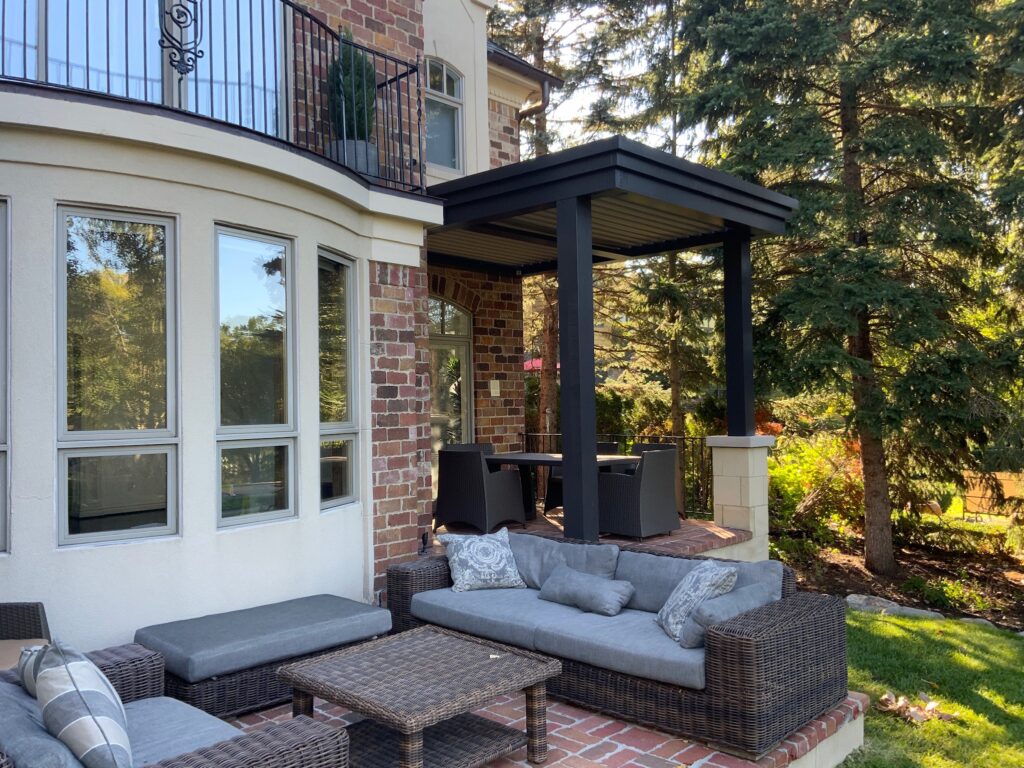
In a humid climate, outdoor furniture rarely gets the chance to stay completely dry for long. Morning dew, summer rain, and moisture in the air can all take a toll, so think beyond how a material looks when you’re furnishing the patio.
Some practical choices include:
- Performance fabrics for cushions and upholstered furniture
- Powder-coated aluminum for furniture frames
- Mold- and mildew-resistant cushions in areas that regularly get damp
- Sealed wood where you want the warmth of a natural material
- Covered storage for cushions, pillows, and other items you don’t want sitting out between uses
Add Bug Control Without Closing Off the Breeze
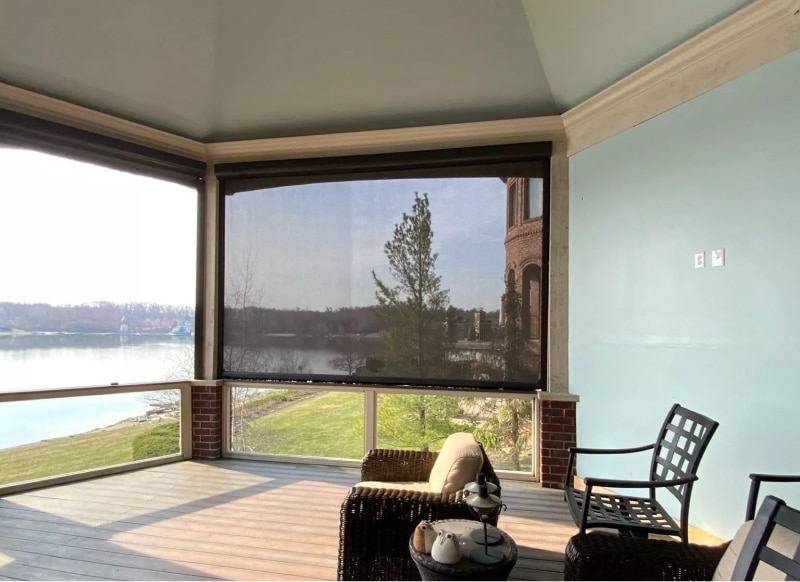
You might not notice the mosquitoes while you’re relaxing outside, but the bites around your ankles and wrists later are hard to miss. Retractable bug screens can keep mosquitoes out of the patio while leaving it open to the evening air. Lower them when the bugs come out, then tuck them away when you don’t need the extra barrier.
Beyond the screened area, reducing places where mosquitoes can breed gives you another line of defense. Mosquitoes lay their eggs in or near water, which is why the CDC recommends emptying and cleaning items that collect water, such as planters, buckets, toys, and birdbaths, at least once a week.
Outdoor Living Ideas for Cold and Snowy Regions
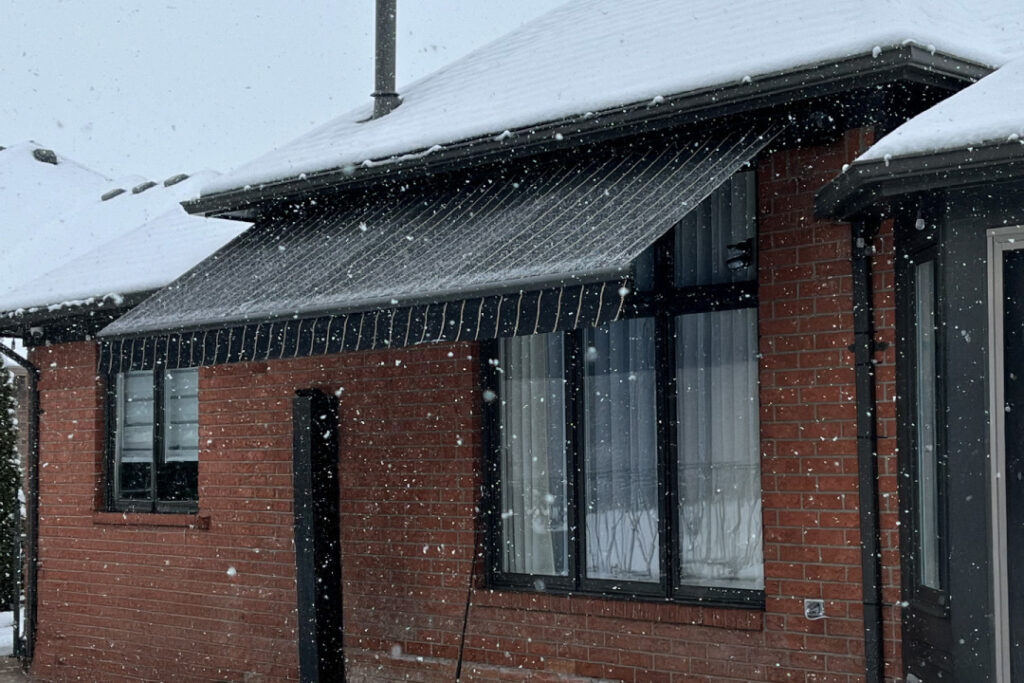
In colder regions, outdoor living does not have to end with the first frost. The bigger concern is how the patio, landscaping, and furnishings will hold up through freezing temperatures and repeated winter weather.
Choose Patio Materials That Can Handle Winter Weather

Snow, ice, and repeated freeze-thaw cycles are hard on outdoor surfaces. Cracks and uneven settling usually trace back to material choices made before the first freeze.
Look for surfaces designed for colder climates, such as:
- Freeze-rated concrete pavers
- Exterior brick
- Natural stone installed with proper drainage
- Outdoor-rated porcelain pavers
Whichever material you choose, proper installation is important in a cold climate. Water that collects beneath a patio can freeze, expand, and contribute to shifting or cracking over time. Good drainage helps prevent that buildup, while a slip-resistant surface can provide better footing when the patio is wet or icy.
Use Trees and Evergreens to Your Advantage in Winter
Evergreen trees and shrubs can keep the patio looking finished after deciduous trees lose their leaves. They also hold color and texture around the patio through winter while offering some protection from cold winds.
Instead of planting a solid wall of greenery, layer trees and shrubs of different heights around the more exposed parts of your yard. Pay attention to mature size before planting so they’ll have enough room to grow without eventually crowding the patio.
Deciduous trees have a different advantage. Once their leaves drop, sunlight can reach areas they shaded all summer. Watch where the lower winter sun falls across your yard before choosing a spot for new trees or seating. You may discover a naturally warmer corner that’s perfect for enjoying a clear winter afternoon.
Layer Warmth Instead of Relying on One Heat Source
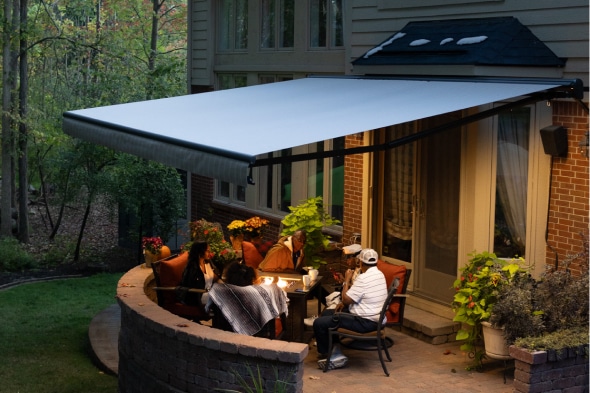
You don’t need to heat the entire backyard to make a chilly evening enjoyable. Focus on the area where people actually gather and bring the warmth there.
Consider:
- A fire pit or fire bowl in an open area
- A patio heater
- Outdoor rugs
- Weather-resistant cushions
- Cozy throws for cool evenings
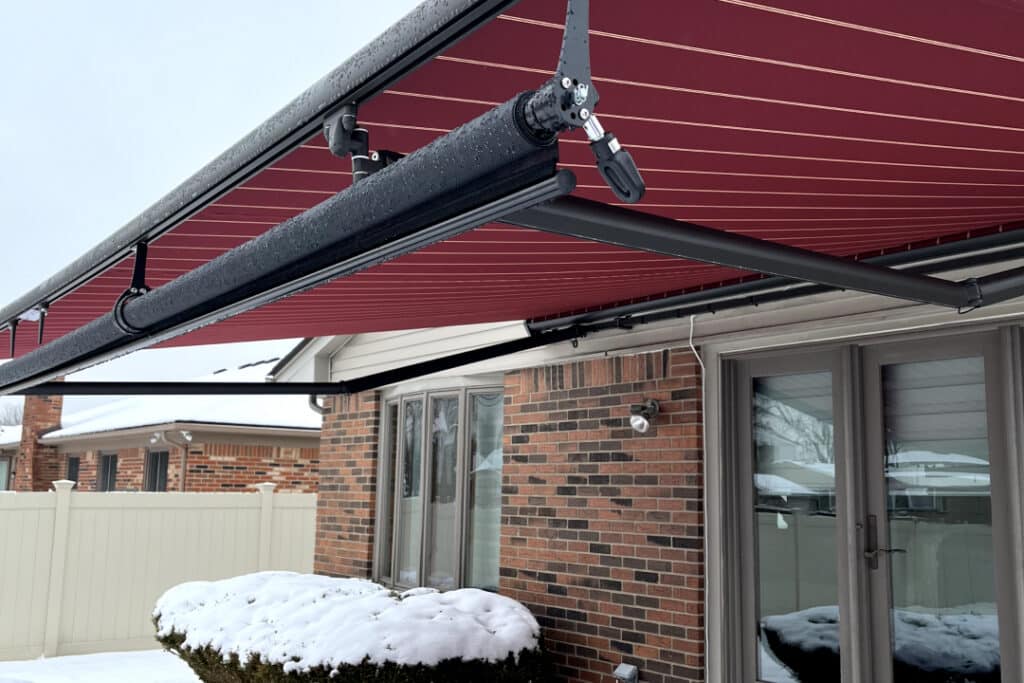
If your seating area is covered by a retractable awning, a heater can make that spot even more inviting as temperatures drop. Just be mindful of the type of heater you choose and where you place it. Our guide to using a heater under an awning walks through your options and what to consider before adding one to your setup.
Outdoor Living Ideas for Coastal and Wind-Prone Areas

A coastal patio may come with a view worth preserving, but salt air and strong winds change how you plan the space. Materials wear differently near the coast, and storm preparation becomes part of the routine.
None of that has to mean giving up the reasons you enjoy being outside. It just means planning around salt air and wind instead of working against them.
Plant a Landscape That Thrives in Salt Air

Choose plants that can handle the salt, wind, and exposure common in coastal yards. The University of Georgia Cooperative Extension notes that salt reaches coastal plants through both the soil and ocean spray carried on the wind. Look for varieties suited to your region and how much exposure your property actually gets.
Layering different plant types works better than relying on just one:
- Flowering groundcovers: Beach sunflower brings bright yellow color to sunny coastal yards and can spread to cover larger areas.
- Ornamental grasses: Switchgrass brings height, texture, and movement to the landscape as its blades and seed heads sway in the breeze.
- Shrubs: Yaupon holly adds year-round greenery and can provide screening around patios or property lines.
- Larger evergreens: Southern redcedar can add height and structure where there’s enough room for it to mature.
Layering low plants, grasses, shrubs, and trees gives the landscape more depth while creating pockets of privacy without completely hiding the view.
Light the Backyard for Evenings Outside

Coastal backyards often come alive after the sun goes down. Think about the warm glow of lights over the dining table, a softly lit path toward the patio, or subtle uplighting that keeps palms, ornamental grasses, and other favorite plants visible after dark.
Layer lighting throughout the yard to give each area its own atmosphere. Brighter light near steps and walkways can improve visibility, while a softer glow around seating and landscaping invites everyone to linger outside a little longer.
Prepare Your Backyard Before Storm Season Arrives

If you live near the coast, bringing things inside before a storm eventually becomes part of the routine. Plan for that when you design the patio so you have somewhere convenient to put loose items when the forecast changes.
A storage bench near the seating area can hold cushions and throws while doubling as extra seating. For larger patios, a deck box gives pool toys, outdoor rugs, and other accessories a designated place to go. Keep anything that could blow away easy to grab and close to storage rather than scattered throughout the yard.
Before severe weather arrives:
- Bring cushions, rugs, and loose decor inside or place them in appropriate storage.
- Move lightweight furniture indoors and secure larger pieces.
- Clear branches and other loose debris from around the patio.
- Retract your awning before high winds or severe weather arrive.
Marygrove awnings are designed to withstand winds up to 20 mph, but coastal weather can change quickly. The built-in wind sensor automatically retracts the awning when it detects unstable conditions, providing backup when the wind catches you by surprise. For a known severe storm, retract the awning ahead of time rather than relying on the sensor.
Build a Backyard That Works With Your Climate

A backyard works best when it’s designed around its climate, not in spite of it. That’s what makes it a space you’ll actually use throughout the year.
At Marygrove, we know firsthand how much weather shapes outdoor living. Schedule a free consultation to explore a motorized retractable awning designed for your home and the way you enjoy your backyard.

Josh Eberly
Josh Eberly's background in home renovation runs from the ground up. After years successfully flipping houses and seeing firsthand what adds real value and livability to a property, he brings that practical, hands on perspective to the outdoor space at Marygrove. Today he focuses on retractable awnings, patio covers, and custom shade solutions that help homeowners turn underused patios and decks into spaces they actually enjoy. Outside of work Josh enjoys spending time with his family, sports (WE ARE!), and cultivating experiences with his close friends.
Favorite Marygrove Awning - Harbor Grey with White Frame.