Wondering how to block west-facing sun? The right shade setup stops intense afternoon heat before it warms your living spaces, keeping your home comfortable without forcing you to sit behind blackout curtains all day.
Here is what you need to know:
- Exterior shade works because it blocks sunlight before it enters your home.
- Retractable awnings with front and side screens create layered shade for patios, decks, and adjacent windows.
- Retractable solar screens, currently available through Marygrove’s Michigan service area, reduce heat and glare while preserving airflow and outdoor views.
- Interior shades and blackout curtains work as a second layer after exterior shade.
- Window film and landscaping offer lasting relief, while quick fixes help in the meantime.
- Shading your windows from outside and inside together beats relying on just one method.
West-facing windows let in plenty of light, but they also catch the hottest sun of the day. Once that afternoon heat hits the glass, rooms warm up fast and indoor curtains simply trap it inside.
You have much better options. Marygrove’s motorized retractable awnings deliver on-demand shade for your deck or patio, extending coverage to nearby windows as the sun shifts across your home.
Keep reading to find the right shade strategy for your space and how to put it into practice.
How to Block West-Facing Sun Before It Reaches the Glass
West-facing sun becomes harder to manage as it drops lower in the sky. That low angle pushes direct light through windows and across decks or patios, slipping right beneath standard overhead shade.
Although interior blinds and curtains help reduce glare, exterior shade stops the heat before it ever reaches your home. The right approach depends on where the sun causes the biggest issue, whether that is interior living spaces, your patio doors, or the outdoor seating area itself.
Retractable Awnings Turn West-Facing Patios Into Usable Space
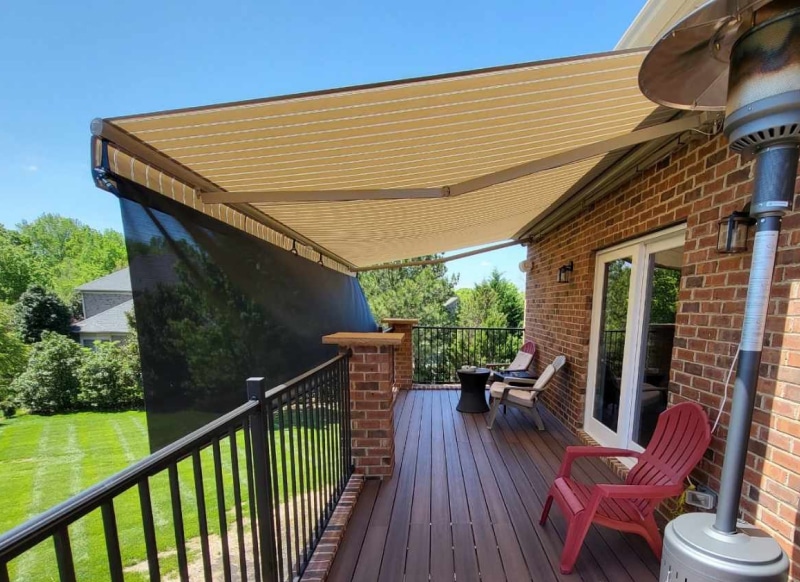
A west-facing patio often becomes the hottest spot in your yard by late afternoon. A motorized retractable awning creates instant overhead shade for outdoor seating, frequently extending far enough to protect patio doors and adjacent windows. When properly positioned, it blocks 65 to 77 percent of solar heat before it ever reaches your living space.
As the afternoon goes on, the sun continues dropping toward the horizon. At that point, the sunlight can travel beneath the awning and shine directly into your seating area. Marygrove’s retractable front and side screens fill that gap by adding vertical shade exactly where overhead coverage stops.
One of the biggest advantages is flexibility. Extend the awning when the sun is strongest to create a cool, shaded retreat, then lower the screens as the sun sinks low enough to slip underneath, keeping both in place for dinner with family or evening entertaining. When you want more sunshine or an open view of the sky, simply retract both.
Together, the awning and screens create a complete shade system that helps:
- Block low-angle sun before it strikes patio seating or sliding doors
- Protect west-facing siding from intense heat
- Lower patio surface temperatures
- Add privacy from nearby neighbors
- Buffer sudden wind gusts without cutting off the breeze
- Retract whenever full coverage is no longer needed
Marygrove gives homeowners more control as the afternoon sun shifts. Adjustable pitch lets you change the awning’s angle, and smart retractable awning features allow you to extend or retract everything using a remote, smartphone app, or voice commands.
Retractable Solar Screens Stop the Low Afternoon Sun at Its Source
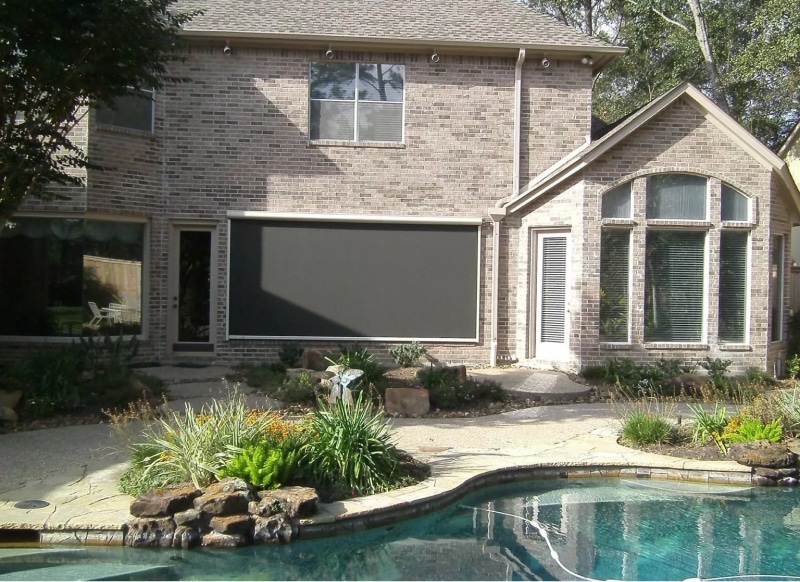
For homes in Marygrove’s Michigan service area, exterior solar screens offer targeted control over low-angle rays without sacrificing natural daylight or your view of the yard.
Marygrove retractable solar screens help you:
- Block low-angle afternoon sunlight before it heats the glass
- Eliminate harsh reflections on computer monitors and TV screens
- Protect furniture and flooring from long-term sun damage
- Maintain steady airflow with added daytime privacy
- Retract out of sight after sunset to open up your view
- Adjust the screen by remote for easier daily use
Marygrove’s residential solar screens use PVC-coated fiberglass mesh, custom built to match your window dimensions. Our team handles the entire installation and shows you how to operate your setup before leaving.
Landscaping Creates Seasonal Shade With a Longer Timeline

Strategic landscaping softens intense sunlight and cools surrounding outdoor areas. While trees take longer to establish than a manufactured system, they provide reliable seasonal coverage for years to come.
Keep these factors in mind when planning your yard:
- Choose deciduous trees to create dense summer shade and allow winter sunlight through once the leaves drop.
- Use tall shrubs to protect ground-floor windows and boost privacy around patio seating.
- Follow the afternoon sun. Plant trees and shrubs where they’ll intercept west-facing sunlight before it warms your windows or exterior walls, especially near the patio.
- Plan for the future. Consider mature height, root systems, ongoing maintenance, and the years required for trees to reach full size.
- Add movable shade with potted plants. Large container trees and tall planters provide quick relief on decks or balconies while new plantings grow.
A local nursery or arborist can help you pick hardy species suited to your soil. They can also help keep new plants safely clear of foundations and power lines.
Interior Window Treatments Work Best as a Second Layer
Interior window treatments still play an important role, especially when paired with exterior shade. Once the bulk of the heat is blocked outside, interior treatments handle whatever glare and privacy concerns remain.
Window Film Can Reduce Heat and Glare

Window film offers a lower-cost way to reduce glare and UV exposure, plus some of the energy that heats a room. Removable, static-cling films are also handy options for rental properties.
Check that the film is compatible with your window type before application. Some products can trap heat or affect the seals and warranties on insulated or double-pane windows. Highly reflective films may also redirect sunlight toward landscaping, vehicles, siding, or neighboring properties, so review the manufacturer’s guidance and consider where reflected light will land.
Solar Shades Preserve Daylight and Reduce Glare

Solar shades are an interior window treatment made from a tightly woven screen fabric that filters sunlight without fully blocking your view. A tighter weave provides stronger protection from west-facing sun, while a more open weave lets in additional daylight and preserves a clearer view outdoors. Light-colored fabrics reflect more heat, while darker fabrics reduce glare and make it easier to see through the window.
Cellular Shades Improve Insulation

Cellular shades use honeycomb-shaped air pockets to slow heat transfer through the glass. They’re especially useful on older single-pane windows and in rooms that stay warm past sunset, helping maintain year-round energy efficiency.
Blackout Curtains Focus on Darkness

Blackout curtains create darker bedrooms, nurseries, and media rooms while helping reduce glare. They help most when darkness is the priority or when paired with exterior shade as part of a layered plan.
Blinds and Shutters Redirect Light

Blinds and shutters give you precise control over incoming sunlight throughout the afternoon, softening indoor brightness without creating harsh glare.
Low-Cost Fixes Offer Relief While You Plan a Permanent Solution
If a permanent shade solution isn’t in the budget today, several temporary options can help reduce west-facing sun while you plan for a long-term upgrade.
- Exterior shade cloth: Creates shade before sunlight hits the window and works well for temporary installations on patios or fences.
- Angle-adjustable umbrellas: A quick way to shade outdoor seating areas, though they often need repositioning as the sun moves.
- Suction-cup blackout panels: An inexpensive option for renters or short-term use. They block light effectively but also cover the view and natural daylight.
- Portable canopies: Provide broad overhead shade for patios and decks. They take up more space and may need to be secured during windy conditions.
- Temporary outdoor roller shades: Add privacy and reduce glare while blocking some afternoon sun. Installation is usually simple, though durability varies by product.
These options can improve comfort, but they all involve tradeoffs. Most need manual adjustment throughout the day and lose coverage as the sun shifts position. On top of that, they typically don’t last as long as professionally installed shade systems. Some also affect your home’s appearance or struggle to stay secure during strong winds.
For homeowners who want reliable daily shade, retractable awnings offer immediate, adjustable coverage.
Cool the West Side of Your Home Before the Next Hot Afternoon

The right setup depends on where afternoon heat impacts your home most, whether that means high indoor temperatures or an exposed backyard patio. Marygrove’s motorized retractable awnings provide adjustable overhead shade, while optional front and side screens add coverage as the afternoon sun drops lower.
Ready to make your home and patio cooler this season? Schedule a free consultation with Marygrove to find the right shade solution for your home.

David Tavidian
David Tavidian is the Vice President of Sales at Marygrove Awnings, leading a team of over 50 sales professionals across 22 states. His expertise in retractable awnings and shading solutions ensures homeowners and businesses receive high-quality, durable products tailored to their needs. When not helping customers find the perfect awning for their backyard application David enjoys spending time with his family, debating the finer aspects of life, creating art, and relaxing under a Marygrove awning during a light rain.
Favorite Marygrove Awning - Cafe Black with Bronze Frame.